What Stone Mapping Is Not – and Why That Matters
Sometimes you understand a method best when you know what it is not.
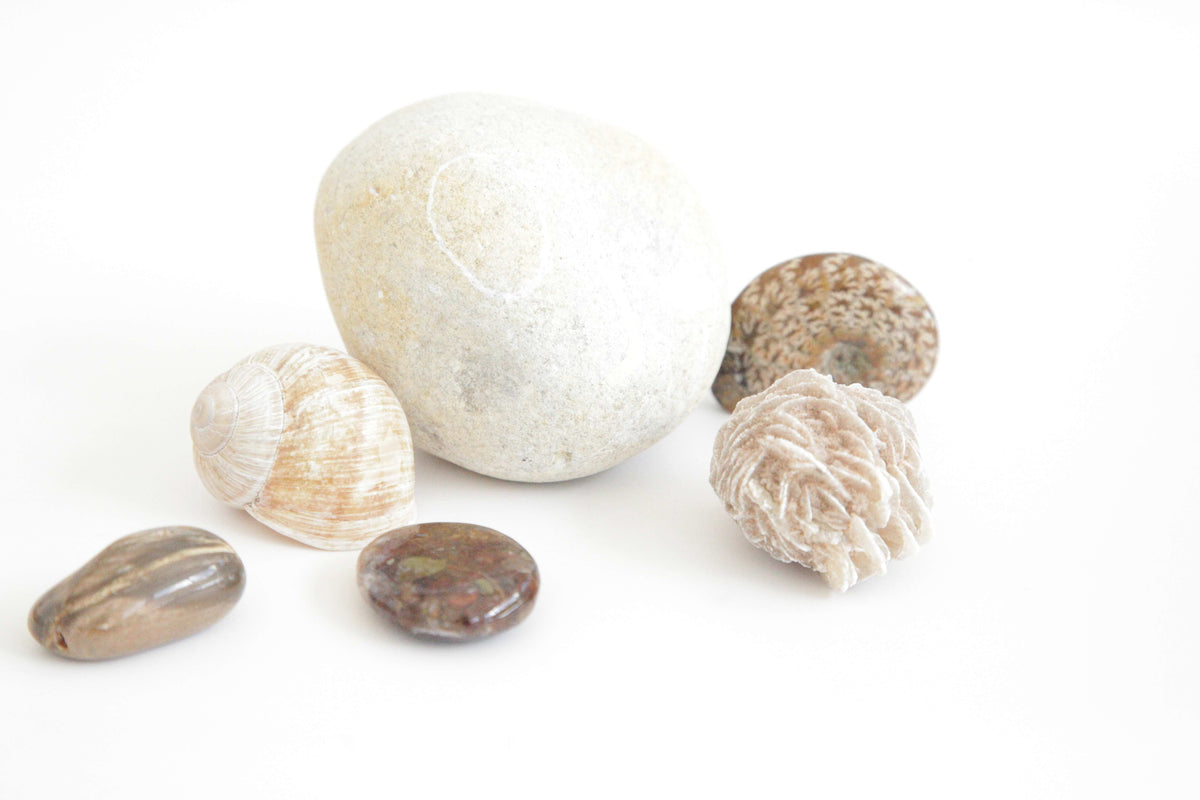
Stone Mapping is simple. You need a question, a handful of stones, and a willingness to look at your own thinking from a different perspective for once.
But behind this simplicity lies a very specific attitude.
No one knows your picture better than you do.
No one interprets your stones
When you select a stone in Stone Mapping, you decide what it represents.
Perhaps a person. A decision. A wish. Or something you cannot yet put into words.
It doesn't matter whether the stone is large or small, round or angular, light or dark.
It has no fixed meaning.
A black stone does not automatically stand for something difficult. A red stone does not have to mean love. And a stone that is far away does not necessarily tell of a separation.
What a stone means is up to you alone.
No classic setup
Perhaps you know family constellations or other setup methods.
In Stone Mapping too, relationships and connections are made visible in space. But there is a major difference.
In Stone Mapping, there are no proxies who speak for other people or describe their feelings.
No one takes on a role in your picture.
And no one changes the arrangement of your stones.
You create your picture yourself. You look at it. And if you want to move something, you decide which stone you place where.
Because it is your picture.
No therapy and no diagnosis
Stone Mapping is not a psychotherapeutic treatment and not a diagnostic procedure.
It is not about uncovering hidden causes, judging people, or solving problems for you.
Stone Mapping can help you make your thoughts, questions, and personal perspectives visible.
What you recognize in it and what meaning you give to the experience remains yours.
The method does not replace medical, psychological, or psychotherapeutic support.
No ready-made answer either
Perhaps this is the most important feature of Stone Mapping:
You do not get an answer from someone else.
No one tells you what you should do.
No one explains to you which stone is placed correctly or which decision would be the best.
Instead, a space is created in which you can discover for yourself.
Perhaps you notice something you have overlooked until now. Perhaps your view of a situation changes. Perhaps a new question arises.
And sometimes a picture simply stays as you have laid it for a while.
That is also allowed.
The freedom to see for yourself
Stone Mapping follows no fixed interpretation.
You do not have to prove anything, explain anything, or reach any particular result.
You are allowed to be curious.
You are allowed to move a stone and see what changes as a result.
You are allowed to find that something feels good—or that it doesn't.
And you are allowed to leave your picture as it is.
You lay. You look. You move. You decide.
That is the attitude behind Stone Mapping.
Someone else does not know what your picture is supposed to tell you.
You find out for yourself what you recognize in it.
What is laid is what counts.
Because everything begins with your question.
And everything that arises from it belongs to you.